
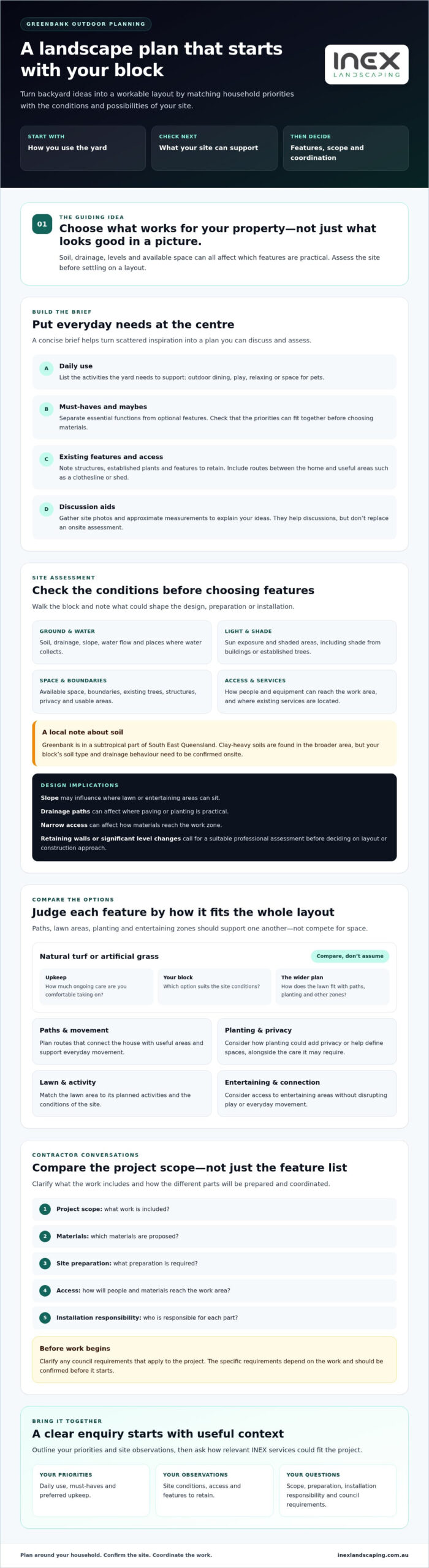
What if the best feature for your backyard is the one your site can support, rather than the one that looks best in a picture? It’s easy to collect ideas for landscape design Greenbank, but turning them into a workable plan means considering your block, household and priorities together. Soil, drainage, levels and available space can all affect which features are practical, so assess the site before settling on a layout.
A useful plan connects everyday needs, such as space to relax or play, with choices like turf, paving, retaining walls and fencing. It also helps you see how the features fit together, what needs to be prepared and which parts of the work need to be coordinated.
This guide will help you organise your ideas, compare practical options and choose a contractor with confidence. You’ll learn what to look for during a site assessment, how to compare project scopes and what to clarify about council requirements before work begins. The aim is to give you a clearer basis for planning an outdoor space that suits your Greenbank property.
Key Takeaways
- Start your landscape design Greenbank plan with how you want to use the space, then shape the layout around those priorities.
- Use an onsite assessment to check drainage, slope, sun exposure, access and existing services before choosing features.
- Compare natural turf and artificial grass by upkeep, suitability for your block and how each option fits the wider layout.
- Before selecting a contractor, clarify the project scope, materials, site preparation, access and who is responsible for installation.
- Prepare a focused enquiry by outlining your priorities and site observations, then ask how INEX’s relevant services could fit the project.
Landscape design in Greenbank: turn outdoor ideas into a workable plan
Landscape design is the planning stage that considers how an outdoor space will function, connect and look before work begins. It brings separate ideas into a layout, so paths, lawn areas, planting and entertaining zones support one another rather than compete for space. A clear plan also helps you consider access, privacy and how much ongoing upkeep you’re comfortable taking on.
For a Greenbank home, begin with the people who use the yard and the routines it needs to support. Do children need space to play while adults dine outside? Do pets need a lawn area? Would you rather spend weekends maintaining gardens or keep upkeep simpler? Answering these questions helps separate essential functions from optional features and makes decisions easier as the project takes shape.
This guide focuses on planning decisions rather than providing a general catalogue of available work. For an overview of landscaping services in Greenbank, see our separate guide. For a broader introduction to the principles and process, Wikipedia’s overview of landscape design offers helpful context.
What should a Greenbank landscape design achieve?
Start by mapping how you want to move through and use the yard. A path should connect the house to useful areas; lawn should suit the activities planned for it; and an entertaining zone should be accessible without disrupting play or everyday movement. For homeowners planning sheltered entertaining areas, seeing how outdoor living specialists such as Patios Coast2Coast integrate roof systems with surrounding zones can provide valuable layout inspiration. Planting can add privacy or define spaces, while the layout should reflect how much garden care you want to take on.
Think of these elements as one arrangement, not a shopping list. A feature may look appealing on its own but take space or access away from a higher priority. Before choosing materials, mark each idea as essential or optional and check that the must-haves can fit together.
What belongs in an initial design brief?
A concise brief gives you and a contractor a practical starting point for discussion. Note household priorities, preferred look, maintenance expectations and access needs, such as a clear route between the home and a clothesline or shed. Include existing structures, established plants and other features you’d like to retain. This keeps useful parts of the yard in view as you consider new ideas.
- Daily use: list activities such as outdoor dining, play, relaxing or space for pets.
- Must-haves and maybes: separate essential functions from features you’d consider if the site allows.
- Existing conditions: note structures, plants and areas you want assessed or preserved.
- Discussion aids: gather site photos and approximate measurements to explain your ideas.
Photos and measurements can make your priorities easier to discuss, but they don’t replace an onsite assessment. The actual block needs to be considered before materials, levels or features are settled. With a clear brief, landscape design Greenbank discussions can move from scattered inspiration towards a plan shaped around your household and property.
Plan for Greenbank conditions with a careful site assessment
A design that suits one block may not suit the next, even on the same street. Before choosing lawn, paving, materials or structural features, assess the actual property. Check the site before selecting materials: the ground and water flow should shape the plan.
Walk the block after rain if possible and note where water collects or travels. Check the slope, shaded areas, sun exposure, boundaries, existing trees and structures, and how people and equipment can reach the work area. Identify existing services before planning excavation or installation. Soil can vary between properties, so don’t assume its type or drainage behaviour from the suburb alone. Greenbank is in a subtropical part of South East Queensland, and clay-heavy soils are found in the broader area, but conditions on your block need to be confirmed onsite.
Which property conditions can change the design?
A slope may influence where lawn or entertaining areas can sit, while a drainage path can affect where paving or planting is practical. Shade from a building or established tree may change which areas suit lawn, and narrow access can affect how materials reach the work zone. Boundaries, trees and existing structures can also shape privacy and usable space. If you’re considering a retaining wall or significant level changes, seek a suitable professional assessment before deciding on the layout or construction approach.
How should a design respond to South East Queensland conditions?
Consider how sunlight and rainfall affect specific parts of your yard, as well as how you’ll use them across the seasons. Water-wise planning principles, such as choosing plants suited to local conditions and grouping areas with similar water needs, are discussed in the U.S. Environmental Protection Agency’s landscaping tips. Use this as general guidance, then base decisions on your property and local conditions.
Choose between natural turf and artificial grass by weighing intended use, upkeep preferences and site suitability. Natural turf may suit households that value a living lawn and are prepared to maintain it. Artificial grass may suit a household looking for a different maintenance routine, but ground preparation and drainage still need consideration. Neither option is right for every yard. For more on that option, read our guide to artificial grass installation in Greenbank.
A careful assessment gives landscape design Greenbank decisions a practical starting point and helps connect the layout to the property rather than relying on assumptions. If you’re weighing up installation options, you can discuss your landscaping project with INEX and ask which services may suit your site.
Compare landscape design choices for your Greenbank outdoor space
Once you’ve assessed the block, compare features by their purpose, the upkeep they involve and how they fit the site. A lawn, paved path, retaining wall or fence each addresses a different need. The right combination depends on your priorities and the conditions on the ground, not a one-size-fits-all ranking.
| Feature | Function | Upkeep and site fit | Coordination to consider |
|---|---|---|---|
| Natural turf | Provides a living lawn for activities and open space. | Consider your willingness to maintain it and whether the area’s sun, soil and drainage suit lawn. | Plan its edges and levels alongside paths, garden areas and paved zones. |
| Artificial grass | Creates a lawn-like surface where that suits the intended use. | Compare its upkeep requirements with natural turf, and check the area’s drainage and preparation needs. | Allow for transitions to paving, garden beds and other surfaces. |
| Paving | Defines circulation routes and areas for outdoor use. | Check levels and how water will move across and around the paved area. | Connect paths and usable areas without obstructing access or drainage. |
| Retaining walls | Can respond to changes in site level and help define zones. | Suitability depends on the specific levels and site conditions; check project requirements before proceeding. | Consider how the wall relates to nearby lawn, paving and water movement. |
| Fencing | Establishes boundaries and can help shape privacy and access. | Choose its position with the site boundary and intended use in mind. | Coordinate gates and access with paths and the relationship between outdoor zones. |
How do you choose between natural turf and artificial grass?
Start with the lawn’s intended use, then weigh maintenance preferences against the area’s sun, drainage and ground conditions. Neither option is automatically better: what suits a play area may not suit a shaded space or a household seeking a different upkeep routine. For more on installation considerations, see this natural turf contractors guide for Brisbane South. The Australian Government’s advice on sustainable landscaping and garden design can also help inform choices that respond to local conditions.
When do paving, retaining walls or fencing make sense?
Use paving where you need a clear route or defined outdoor-use area, while checking levels and water movement. Consider a retaining wall when a change in levels affects how the space can be used, and confirm requirements for the specific project. Fencing can support privacy, define boundaries or manage access, but its position should work with the layout rather than divide useful areas unnecessarily.
Choose each feature for a defined purpose and its fit with the assessed site. A coordinated landscape design Greenbank plan considers how these elements meet and function together, so materials and boundaries support the way you want to use the yard.
Choose a landscape design contractor in Greenbank with confidence
A design idea may look right on paper but still need adjustment to suit the actual block. Use a site discussion to check how proposed features relate to levels, drainage, access and existing structures. A contractor should be able to explain what they’ve observed and how it affects the proposed work. Before comparing proposals, give each contractor the same brief and request clear inclusions and exclusions.
What should you ask before accepting a proposal?
Ask what’s included, what’s optional and who supplies each material. Clarify how site preparation, access constraints and existing features will be handled, and who is responsible for each part of installation. If decisions may change during the work, ask how changes and installation stages will be communicated. Written answers make it easier to understand what you’re agreeing to and where responsibilities sit.
Use this checklist to compare the practical scope of each proposal:
- Scope: Which features and tasks are included, and what is excluded?
- Materials: What materials are proposed, and who supplies them?
- Site preparation: What preparation is included, and how will existing structures or other features be treated?
- Access: Have access limits and the route for moving materials to the work area been considered?
- Installation responsibilities: Who is responsible for each element, and how will decisions, changes and stages be communicated?
How can you compare contractors fairly?
Assess proposals against the same brief and requested scope, not headline totals alone. Look for specific responses about your site conditions, proposed materials, workmanship and how features such as paving, turf, retaining walls and fencing will coordinate. If structural or drainage work is proposed, ask what council or technical requirements may apply to your project and who will confirm them. Clear explanations help show whether a proposal reflects your block and priorities.
Also confirm the form of any design support and what documentation, if any, is included. Don’t assume a standalone design package is part of an installation proposal. Ask how the agreed plan will guide the work and what happens if site conditions require a change. These questions help you judge a landscape design Greenbank contractor on more than presentation alone.
INEX Landscaping is based in Greenbank and provides landscaping and gardening, turf and artificial grass installation, paving, retaining walls and fencing. To discuss your Greenbank landscaping project and clarify which work may suit your site, contact INEX about your landscaping project.
From landscape design ideas to an INEX project enquiry
A focused enquiry helps turn your landscape design Greenbank ideas into a practical conversation about your property and the work you have in mind. Start with your brief and site observations, then identify the outcomes that matter most. You don’t need every material or detail decided before getting in touch. Be clear about what you want to achieve and where you’d welcome advice.
What information should you prepare for an enquiry?
Share the property suburb, how you want to use the yard and the main result you’re hoping for, such as a more usable lawn or a defined outdoor dining area. Include photos and rough measurements if available, along with notes about access, visible drainage concerns and features you’d like to retain. List preferred elements, such as turf, paving, a retaining wall or fencing, and flag which choices are still open to discussion.
How does a design discussion lead to practical landscaping work?
INEX Landscaping is based in Greenbank and offers landscaping and gardening, turf and artificial grass installation, paving, retaining walls and fencing. These services may suit parts of a wider outdoor plan, depending on the property and project scope. Discuss your priorities alongside the site conditions, and ask which elements INEX can undertake and how they could be coordinated. Confirm directly what consultation, design support and project inclusions are available rather than assuming a standalone design package or particular documentation is included.
If paving is one of your priorities, review this guide to paving installation in Greenbank to prepare questions about how it may fit your plans. For proposed structural or drainage work, ask what project-specific requirements need to be checked before work proceeds.
Before agreeing to a scope, clarify the proposed work, materials, site preparation, access arrangements and who is responsible for each installation task. Ask what the next step involves and how any changes would be discussed. This gives you a clearer picture of how your priorities could translate into practical work without presuming the process or deliverables.
Ready to discuss your priorities and the work you’re considering? Contact INEX Landscaping about your Greenbank project.
Make your Greenbank yard work for you
A successful outdoor project starts with how you want to use your yard, then takes shape around the conditions of your property. Set clear priorities, assess the site before choosing features, and compare contractor proposals by their scope, materials and installation responsibilities. These steps give your landscape design Greenbank plans a practical foundation and help you move from inspiration to informed decisions.
INEX Landscaping is based in Greenbank and serves residential and commercial clients across South East Queensland, including Greenbank, Yarrabilba, Parkridge, Marsden, Bahrs Scrub and South Maclean. Its services include landscaping and gardening, turf and artificial grass installation, paving, retaining walls and fencing. If your ideas include these elements, a focused discussion can help clarify which work may suit your property and what project details need to be confirmed.
Discuss your Greenbank landscaping project with INEX, and take the next step towards an outdoor space shaped around your home and household. With a clear brief and a site-led approach, you can move forward with confidence.
Frequently Asked Questions
What should landscape design include for a Greenbank home?
A useful plan begins with how your household wants to use the yard, then considers the property’s layout, access, levels, drainage and existing features. It can coordinate lawn areas, paths, paving, retaining walls and fencing where they suit the site. Before agreeing to a proposal, ask what planning documents, site assessments and installation details are included. Design services and deliverables differ between providers, so confirm the scope rather than assuming a particular package is standard.
How do I choose a landscape designer in Greenbank?
Choose a contractor who can discuss your priorities in relation to the actual site. Ask how they assess conditions, define the work scope and connect design decisions with installation. Give each contractor the same brief, then compare inclusions, exclusions, proposed materials, site preparation and communication arrangements. You can also request relevant examples or references where available. Confirm exactly which design services and documents are included, rather than relying on a general description of the work.
How much does landscape design cost in Greenbank?
Landscape design costs depend on your property, the work planned and whether the scope includes planning, materials, preparation or installation. There isn’t a confirmed standard fee or standalone design package for INEX. Ask for a project-specific proposal that clearly separates the work and its inclusions, then compare it with proposals based on the same scope. This makes it easier to understand what each contractor is offering without relying on a broad estimate.
Do I need a landscape designer before installing turf or paving?
Not every small turf or paving installation needs a separate design service. For a straightforward job, ask the installer what site assessment and preparation are included. A broader plan may be useful if several features need to work together, or if access, levels or drainage could affect the layout. Before proceeding, clarify how the installation will connect with nearby areas and who is responsible for coordinating any related work.
Can landscape design help with a sloping Greenbank block?
Yes. A site-led plan can show how a slope affects access, usable areas, drainage and where features may fit. The right approach depends on your property, so don’t assume the same solution suits every Greenbank block. If you’re considering retaining walls or substantial level changes, ask the contractor to assess the site and identify applicable technical or council requirements before the project scope is confirmed.
Should I choose natural turf or artificial grass for my Greenbank yard?
The better fit depends on how you’ll use the area, your maintenance preferences and the site’s conditions. Compare natural turf and artificial grass for upkeep, drainage, appearance and suitability for the intended space. Neither option is automatically right for every property. Ask the installer to explain the preparation each choice requires and make sure the selected option, materials and related work are clearly stated in the project scope.
Does INEX Landscaping offer landscape design in Greenbank?
INEX Landscaping provides landscaping and gardening, turf and artificial grass installation, paving, retaining walls and fencing. Ask directly about planning, consultation and installation coordination for your property, as a standalone design package or particular design documents are not confirmed. Based in Greenbank, INEX serves South East Queensland, including Greenbank, Yarrabilba, Parkridge, Marsden, Bahrs Scrub and South Maclean.