
Could a lawn that needs less mowing still be the wrong choice for your yard? If you’re asking “is artificial grass worth it Parkridge”, the answer depends on more than how much time you’d like to save. Sun exposure, drainage, how your household uses the space and your willingness to clean the surface all matter.
It’s understandable to want a tidy, usable outdoor area without regular mowing, but artificial grass isn’t maintenance-free. It can become hot in direct sun, and leaves, spills and pet mess still need attention. The right choice depends on your property and priorities, not broad promises about savings or performance.
This guide weighs the practical benefits and trade-offs to help you decide whether synthetic turf suits your Park Ridge home. You’ll learn what to consider about site conditions, everyday use, upkeep and long-term value. INEX Landscaping supplies and installs artificial grass in Park Ridge, with each project planned around the yard’s layout and intended use.
Key Takeaways
- Whether artificial grass is worthwhile depends on your yard’s layout, intended use and tolerance for ongoing upkeep.
- Compare synthetic turf with natural grass across watering, cleaning, surface feel and appearance before choosing.
- Assess sun exposure, drainage, access and how water moves across your property to identify potential installation considerations.
- To decide “is artificial grass worth it Parkridge”, weigh the convenience of less mowing against the surface’s care needs and how your household uses the space.
- A well-planned installation connects your turf choice and site preparation to the way you want your outdoor area to work.
Is artificial grass worth it in Park Ridge? Start with what you want from your yard
Artificial grass can be worthwhile when it suits your yard’s conditions and the way you want to use the space, and when less routine lawn care matters more to you than living turf. It isn’t automatically the better choice for every Park Ridge property. Comfort underfoot, appearance, drainage, cleaning needs and your preference for natural growth all belong in the decision.
If you’re asking “is artificial grass worth it Parkridge”, compare what you gain with what changes. Synthetic turf removes mowing, but not upkeep altogether. Leaves and dirt still need clearing, while spills and pet mess need cleaning. The surface and the area around it also need to work with how water moves through your yard.
Artificial turf covers a broad category of synthetic surfaces with different uses and constructions. The result depends on more than the idea of “fake grass”. Consider the whole project: existing ground, preparation, the surface selected for its intended use and the care you’re comfortable doing afterwards.
What does ‘worth it’ mean for a Park Ridge homeowner?
Worth can mean financial value, but it can also mean saving time, making a difficult-to-care-for area more usable or keeping an outdoor space tidy with less frequent intervention. Think about how often you use the lawn, who uses it and what you expect it to look like through changing weather and everyday activity. A low-use side yard has different priorities from a space where children or pets regularly play.
Site preparation and material choice affect the project, while intended use shapes what the finished surface needs to do. Ongoing attention matters too: artificial grass may reduce some lawn tasks, but cleaning remains part of ownership. Artificial grass may be worth it when the convenience and appearance suit your property better than the feel and growth of a living lawn. That’s a personal measure, not a promise of universal savings.
Who is most likely to appreciate artificial grass?
It may appeal if you want a consistently tidy-looking area and would rather avoid regular mowing. It can also be worth considering for a small section that’s awkward to reach with a mower. Site conditions still matter: a shaded, uneven or poorly draining area needs careful consideration before choosing a surface.
Ask yourself which matters most in everyday use:
- A neat, uniform appearance with less mowing, or the changing look of living grass?
- A synthetic surface that still needs clearing and cleaning, or the care involved in supporting natural growth?
- A practical area for regular use, or the familiar feel of a living lawn underfoot?
If the feel, growth and natural character of turf are central to how you enjoy your garden, artificial grass may not meet your expectations. If reduced mowing and a tidy finish matter more, it could be a strong option, provided the property and planned use are a good fit.
Artificial grass benefits and trade-offs: what changes after installation?
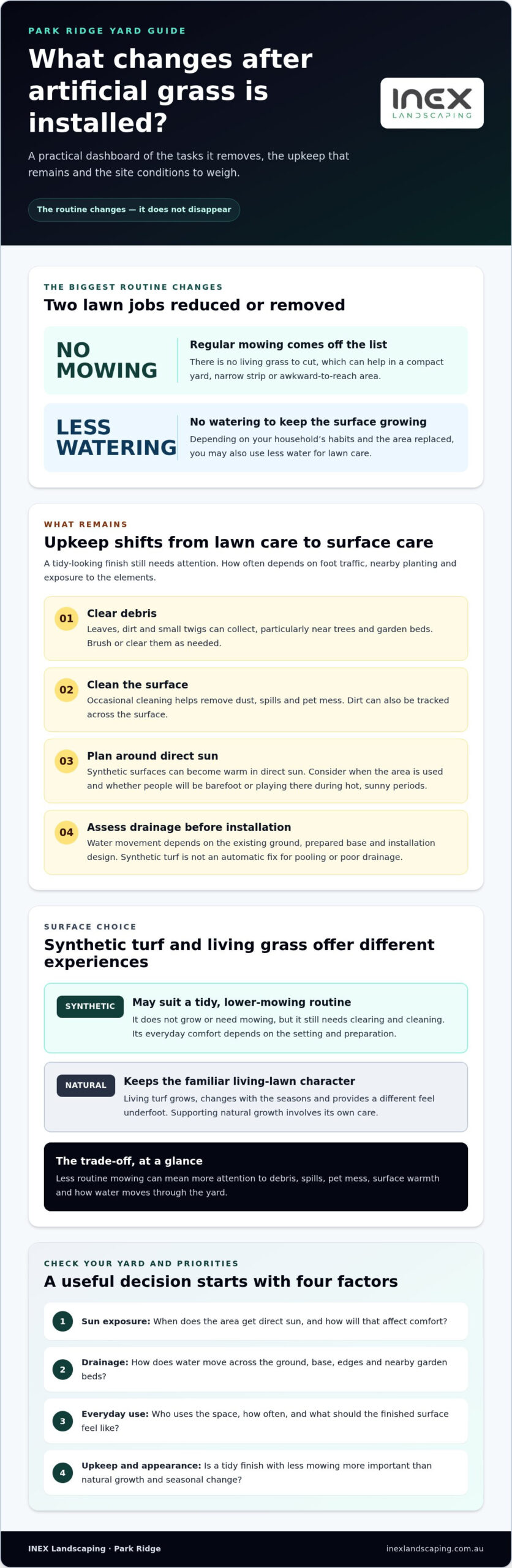
After installation, some familiar lawn jobs disappear, but the routine changes rather than vanishes. You won’t need to mow synthetic turf or manage living grass in the same way. Depending on your household’s habits and the area being replaced, you may also use less water for lawn care. A tidy-looking surface still needs attention, and its comfort and performance depend on its setting and preparation.
Which everyday tasks can artificial grass reduce?
Without living grass to cut, regular mowing is off the list, and you won’t need to water the surface to keep it growing. That can be a practical advantage in a compact yard, a narrow strip that’s awkward to mow or an area where you’d rather spend less time on routine lawn care.
Debris doesn’t disappear, though. Leaves, dirt and small twigs can collect on the surface, particularly near trees and garden beds. Brush or clear debris as needed to keep the area presentable, and clean it occasionally to remove dust, spills or pet mess. How often depends on foot traffic, nearby planting and exposure to the elements.
What drawbacks should you consider before choosing it?
Comfort matters. Synthetic surfaces can become warm in direct sun, so consider when the area gets used and whether people will be barefoot or playing on it during hot, sunny periods. A shaded section may be used differently from an open area, but the surface’s everyday feel should still suit your household’s plans.
Cleaning is part of the trade-off. Pet mess and fallen leaves need practical removal, and dirt can be tracked across the surface as it can on other outdoor areas. Artificial grass also won’t provide the same living-ground experience as natural turf: it doesn’t grow, change with the seasons or feel like grass rooted in soil. If that natural character is central to your enjoyment of the garden, the convenience may not outweigh what you’d be giving up.
Drainage needs attention too. Water movement depends on the existing ground, the prepared base and how the installation is designed. Synthetic turf isn’t an automatic fix for pooling or poor drainage; the site needs to be assessed so water can move appropriately through or away from the area. Edges, adjoining paving and nearby garden beds can all affect how water travels across the yard.
Artificial grass can reduce mowing and watering, but it still needs clearing and cleaning, and its comfort depends on sun exposure and installation. That’s the practical balance behind “is artificial grass worth it Parkridge?” INEX Landscaping can plan artificial grass installation around your yard’s layout and intended use.
Artificial grass or natural turf in Park Ridge: which suits your property?
Neither surface is the clear winner for every home. Artificial grass offers a more predictable appearance and avoids mowing, while natural turf brings living growth and a familiar feel underfoot. The better fit depends on what you value, how the yard is used and whether its sun, shade and drainage conditions suit the surface you choose.
Use this comparison as a starting point. Actual results depend on the site, installation and care.
| Consideration | Artificial grass | Natural turf |
|---|---|---|
| Maintenance | No mowing, but debris still needs clearing. | Requires mowing and care for living growth. |
| Watering | Doesn’t need watering to grow. | Watering needs depend on the lawn and conditions. |
| Surface feel | Synthetic underfoot; comfort can vary with sun exposure. | Living grass with a natural feel. |
| Appearance | Designed for a consistent look. | Changes with growth, weather and lawn care. |
| Cleaning | Leaves, dirt and spills need removal. | Requires general lawn care; debris can still collect. |
When might artificial grass be the better fit?
Artificial grass may suit a household that wants a consistently tidy-looking area without regular mowing. It can also be worth considering for a section that’s awkward to access or difficult to maintain as natural lawn, provided the ground and drainage are suitable for installation.
Think about the area’s everyday routine, not just its appearance on installation day. A sunny spot used for play raises different comfort questions from a shaded side area used occasionally. Nearby trees can mean more leaves to clear, while adjoining paving and garden beds can affect how water moves. These details help show whether the convenience will suit the space.
For a wider comparison of how surface choices relate to Queensland conditions, see this guide to artificial grass versus real turf in Queensland.
When could natural turf suit you better?
Choose natural turf if you value living grass, its changing appearance and the natural feel of a lawn. Homeowners who are comfortable with mowing and other ongoing lawn care may prefer that connection to a growing garden rather than a uniform synthetic surface. Consider how much sun and shade the lawn receives and how water drains across the area, as these conditions affect the suitability and care needs of living turf too.
The best comparison isn’t simply which surface has fewer chores. Ask whether the finish, feel and care routine match how you want to use the yard. That’s a more useful way to answer “is artificial grass worth it Parkridge” for your home.
How to decide whether artificial grass is right for your Park Ridge yard
A useful decision starts with the patch of lawn you want to change, not a general promise about artificial turf. Walk the area at different times of day and think through how you use it. A section for entertaining has different demands from a narrow strip beside the house or a space where pets regularly go outside.
Assess the yard’s conditions and intended use
Note where the yard gets strong sun, stays shaded, collects runoff or sees frequent activity. Decide whether you want the area for relaxing, entertaining, children’s play or pets. These details help define the surface’s role and highlight practical questions for the installation plan, especially where drainage is a concern.
- Define the purpose. Be specific about what happens there on an ordinary day, not just how you’d like the finished yard to look.
- Map exposure and activity. Mark sunny and shaded sections, routes people regularly walk and spots that receive heavier use. Consider whether comfort in direct sun matters for the planned activities.
- Follow the water. After rain, notice where water runs, gathers or leaves the area. Include nearby paving, garden beds and downpipes in your observations, since surrounding surfaces can influence water movement.
- Check access. Look at how people enter the space and how the installation area connects to paths, steps and other outdoor features. Awkward corners or tight access may affect how the project is planned.
These observations make “is artificial grass worth it Parkridge” a property-specific question rather than a yes-or-no rule. A well-used, sunny area with nearby hard surfaces needs different planning from a sheltered, rarely used section. Drainage concerns are specific to the site, so don’t assume a synthetic surface will solve existing pooling by itself.
Compare the upkeep you want with the upkeep required
Ask how much time you want to spend mowing and caring for a living lawn, then be realistic about the alternative. Artificial grass removes mowing, but leaves, dirt and other debris still need routine removal, and occasional cleaning may be needed. Think about nearby plants, household activity and whether that ongoing care feels manageable.
Choose the routine that best fits your household, not a blanket promise of savings. Surface selection and thorough site preparation both matter: performance depends on the product chosen and how the ground is prepared for the yard’s conditions and intended use.
For more detail on what installation involves, explore this guide to artificial grass installation in Greenbank. If your priorities point towards synthetic turf, plan your artificial grass installation around your yard’s layout and intended use.
Artificial grass installation in Park Ridge: plan a result that fits your home
Once you’ve weighed the surface against your household’s needs, the next step is a plan shaped around the property. Artificial grass supply and installation isn’t just about choosing a synthetic surface. The area’s layout, existing ground, access, drainage and intended use all influence how the project should be approached.
What goes into a site-specific artificial grass project?
Start with the section you want to transform. Its size and shape matter, as do practical details such as narrow access, edges beside paving, garden beds and changes in ground level. Consider how people will enter and use the space. A spot for entertaining, for example, may have different requirements from a side area used mainly as a pathway.
Existing ground conditions and water movement also need consideration. The project plan should account for how the area is prepared and how drainage will be managed, rather than assuming the new surface will correct existing pooling. Where runoff comes from surrounding paving or other parts of the yard, that context can inform the preparation approach.
Surface selection should follow the purpose of the space. The feel and appearance you want, the area’s exposure and its expected use all help guide that choice. Performance depends on both the selected surface and site preparation, so a considered plan connects these decisions rather than treating them separately. No single specification suits every yard.
Turn your decision into a clear next step
Before discussing the project, make a short note of what you’ve observed and what you want the area to do. Helpful details include:
- Which section you’re considering and how people access it.
- Whether it’s mainly for relaxing, entertaining, everyday use or pets.
- Where the area gets sun or shade, and where water tends to flow or collect.
- What borders the space, such as paving, garden beds or other outdoor features.
These details give the conversation a practical starting point. They also connect your preferred finish to the layout, use and preparation needs of the yard. If you’re still weighing up artificial grass, explaining your priorities helps frame the project around what matters to your household, rather than broad claims about savings or a one-size-fits-all solution.
INEX Landscaping supplies and installs artificial grass for Park Ridge homeowners, shaping the work around the property and its intended use. Share the area you have in mind and how you plan to use it to discuss a tailored project and request a quote. Discuss your Park Ridge artificial grass project.
Take the next step towards a yard that works for you
The question “is artificial grass worth it Parkridge” is best answered with your own yard in mind. Picture how you want to use the space and what you’d like its everyday care to involve. A clear sense of those priorities makes it easier to shape a project around your home, rather than choosing a surface based on broad promises.
INEX Landscaping is based in Greenbank and serves Park Ridge and nearby communities, including Yarrabilba, Marsden, Bahrs Scrub and South Maclean. If you’re ready to explore what could suit your property, identify the area you have in mind and how you want it to function. A considered discussion can help turn your ideas into a practical next step.
Discuss your Park Ridge artificial grass project and take the first step towards an outdoor area that feels right for your household.
Frequently Asked Questions
Is artificial grass worth it in Park Ridge?
Artificial grass can be worthwhile if the convenience and appearance suit your household better than the feel of natural turf. If you’re asking “is artificial grass worth it Parkridge?”, consider how the area functions through an ordinary week, not just how it looks when newly installed. Think about how often you use it, how much time you want to spend on lawn care and whether the surface’s cleaning needs fit your routine.
Does artificial grass get hot in the Queensland sun?
Yes, artificial grass can become warm in direct sunlight, so consider how exposed the area is and when your household uses it. A spot used for barefoot play during the hottest part of a sunny day may need different consideration from an area used later or mostly in shade. Think about comfort alongside appearance, particularly for children and pets, and plan the surface around the space’s usual use.
Can artificial grass drain properly after heavy rain?
It can drain effectively when the surface, base preparation and site drainage suit the property, but synthetic turf doesn’t automatically fix waterlogging. Before planning an installation, note where water collects after rain and whether it flows in from nearby paving or slopes. A site-specific plan can account for those conditions. If pooling is already an issue, include it in the project discussion rather than assuming it will disappear beneath new turf.
Does artificial grass need any maintenance?
Yes. Artificial grass still needs routine care to stay tidy and usable. Clear fallen leaves, twigs and other debris, especially where trees or garden beds border the area. Dust and tracked-in dirt may call for occasional cleaning, while spills and pet mess need attention. The effort depends partly on how the space is used and what surrounds it, so consider the care you’re happy to keep up over time.
Is artificial grass a good choice for pets and children?
It may suit some households, but suitability depends on the surface’s intended use, sun exposure and the care routine you’re prepared to follow. Consider whether children will play barefoot, whether pets will regularly use the area and how you’ll remove mess. Check the surface’s comfort during the times it will be used most. No single lawn choice is automatically right for every pet, child or activity.
Will artificial grass save money compared with natural turf?
There’s no guaranteed saving for every home. The comparison depends on the installation project, how you currently care for natural turf and what ongoing attention the synthetic surface needs. Consider the time you spend mowing and maintaining your lawn, as well as any watering you use for it, then weigh those factors against the care artificial grass still requires. Base your decision on your household’s use rather than general savings claims.
How do I know whether my Park Ridge yard is suitable for artificial grass?
Start by observing the area after rain and during the times you’d normally use it. Note where water runs or collects, which sections get direct sun, how people access the space and what borders it. Then define its main purpose, such as entertaining or giving pets outdoor access. Homeowners in Park Ridge, Greenbank, Yarrabilba, Parkridge, Marsden, Bahrs Scrub and South Maclean can use these observations to guide a property-specific installation plan.