
Most homeowners believe the hardest part of a new lawn is the physical act of rolling it out, but in the harsh sun of Logan or the sandy stretches of Greenbank, the real battle is won before the first roll even touches the dirt. It is a frustrating reality that many beautiful landscapes fail because they weren’t designed for our unique subtropical conditions. You want a lush, green space where your family can relax, yet the fear of wasting thousands on the wrong variety or poor soil preparation often leads to hesitation.
We understand that successful turf laying South East Queensland requires more than just a green thumb; it demands a local’s knowledge of soil chemistry and climate resilience. This 2026 guide is designed to help you master the process from the ground up, ensuring your investment thrives rather than just survives. We will explore the critical differences between Buffalo, Couch, and Zoysia varieties, explain how to manage difficult local soil types, and provide a step-by-step look at professional installation techniques for a flawless, long-lasting finish.
Key Takeaways
- Identify the “window of success” for planting in Brisbane and Logan to ensure your new lawn establishes before the peak summer heat.
- Discover specific preparation techniques for managing Logan’s heavy clay or Greenbank’s sandy soil to prevent long-term drainage and health issues.
- Match the right grass variety to your property’s shade and traffic levels to ensure your project for turf laying South East Queensland provides lasting value.
- Master professional installation methods, including the “First Line” rule, to achieve a seamless finish and avoid common DIY alignment errors.
- Implement a specialised four-week establishment schedule to protect your investment and learn how to spot heat-related stress signals early.
Mastering the SEQ Climate: Why Turf Laying Requires a Local Strategy
Successful turf laying South East Queensland residents often discover, is a project of precision rather than luck. While our region enjoys a climate that supports growth for most of the year, the subtropical environment is a double-edged sword. High temperatures paired with heavy moisture create a breeding ground for problems that southern states rarely encounter. If you apply a “one-size-fits-all” strategy found in generic gardening guides, you’re likely to face brown patches, invasive weed infestations, and expensive turf failure.
The fundamental principles of turf management dictate that local environmental factors must lead your decision-making. In Brisbane and Logan, the “window of success” is narrower than many realise. Establishing a new lawn requires a delicate balance between soil temperature and moisture levels. When these aren’t aligned, the turf enters a state of stress that invites opportunistic weeds to take hold before the grass can even knit into the soil. This is why a local strategy is essential; you aren’t just planting grass, you’re managing an ecosystem.
The SEQ Humidity-Scorch Cycle
In Logan and surrounding suburbs, the combination of high humidity and intense UV levels creates what we call the “sauna effect” for new turf. High humidity can encourage fungal issues like Pythium if water sits on the leaf blade too long; however, the midday sun can cause “solar scorch” within minutes if the roots aren’t kept cool. To manage this during the first 14 days, you must time your irrigation to ensure the soil stays damp without the foliage remaining wet overnight. Local knowledge of Logan weather patterns, particularly our afternoon storm cycles, prevents you from over-saturating the ground and drowning the delicate new root system.
Choosing the Right Time for Your Transformation
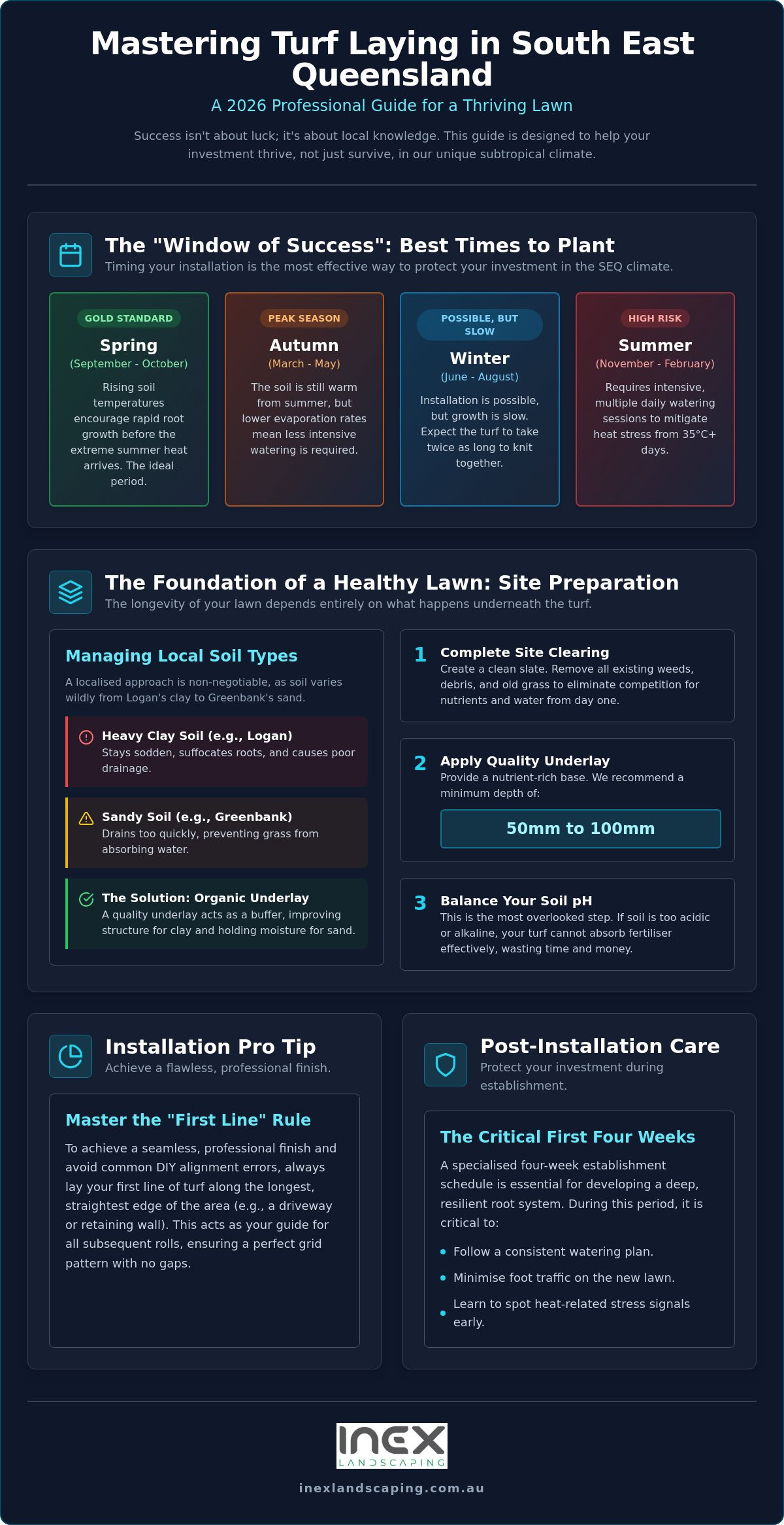
Timing your installation is the most effective way to protect your investment. While you can lay turf year-round in our mild climate, certain seasons offer a much smoother path to success.
- Spring (September to October): This is the gold standard for Greenbank and Logan. Rising soil temperatures encourage rapid root growth before the extreme heat of January arrives.
- Autumn (March to May): A secondary peak season. The soil is still warm from summer, but the lower evaporation rates mean you’ll spend less time on the end of a hose.
- Winter: Possible, but growth is slow. You’ll need to be patient as the turf may take twice as long to “knit” together.
- Summer: High risk. Mid-summer laying requires intensive watering schedules to mitigate the 35-degree-plus days that can dehydrate a pallet of turf before it even leaves the truck.
Essential Site Preparation: The Foundation of a Healthy Queensland Lawn
Preparation is the silent partner of successful turf laying South East Queensland projects. While the physical act of rolling out the green is satisfying, the longevity of your lawn depends entirely on what happens underneath. You can’t simply lay fresh turf over old, dying grass and expect it to thrive. The first step involves a complete site clearing, removing all weeds, debris, and existing vegetation to create a clean slate. This ensures that your new variety doesn’t have to compete for nutrients or water from day one.
The soil profile in our region varies wildly, which is why a localised approach is non-negotiable. If you’re in Marsden or Bahrs Scrub, you’re likely battling heavy clay that stays sodden and suffocates roots. Conversely, properties in Greenbank and South Maclean often sit on sandy soil that drains so fast the grass can’t drink. To fix this, you must apply a high-quality organic underlay. We recommend a minimum depth of 50mm to 100mm to provide a nutrient-rich base. This layer acts as a buffer, holding moisture for sandy sites and improving structure for clay ones. When integrated correctly with existing retaining walls, this preparation creates the crisp, clean lines that define a professional landscape.
Soil Amendments and pH Balancing
Testing your soil’s pH is perhaps the most overlooked step in the entire process. If your soil is too acidic or alkaline, your grass won’t be able to absorb the fertilisers you apply. For those dealing with the heavy clay soils of Logan, adding gypsum is essential to break up the tight structure and improve drainage. In the sandier pockets of Greenbank, focus on adding organic matter to improve water retention. When planning your turf laying South East Queensland project, getting this balance right early prevents the heartbreak of a yellowing lawn six months down the track.
Drainage and Levelling Techniques
A beautiful lawn must be level, but it also needs to be functional. You must ensure the final grade directs water away from your house foundations and any retaining structures. When working around paving and paths, always set your soil level about 20mm to 30mm below the edge of the hardscape. This allows the turf to sit flush once it’s laid, preventing trip hazards and making mowing easier. Finally, using a lawn roller is the only way to achieve that perfectly flat, professional finish. If the preparation feels overwhelming, our team is here to help with expert turf installation services tailored to your specific soil type.
Selecting Your Turf Variety: Matching Grass to Logan and Greenbank Conditions
Choosing the right grass is the most critical decision in your turf laying South East Queensland journey. It’s easy to be swayed by a vibrant green photo, but your backyard has its own micro-climate that will dictate whether that grass thrives or dives. You must evaluate your sun exposure honestly. A yard shaded by established gum trees or high fences requires a completely different species than a wide-open block in a new Greenbank estate.
Consider the “Wear Factor” as well. If you have active dogs or kids playing footy every afternoon, you need a variety with a high recovery rate. While a durable lawn is perfect for home practice, families looking for structured martial arts training can discover Flinn Taekwondo Academy in North Brisbane. Some grasses look spectacular but handle foot traffic poorly, leading to bare patches that eventually turn into dust or mud. Drought tolerance remains a priority for our region. Even though July 2026 dam levels are healthy and mandatory restrictions aren’t in place, a water-wise lawn is still a smarter long-term investment for the future.
The Big Three: Buffalo, Zoysia, and Couch
For most Queensland families, Sir Walter DNA Certified Buffalo remains the reliable all-rounder. It’s exceptionally hardy, handles shade well, and feels soft underfoot. If your yard is sun-drenched and you want to minimise water use, TifTuf Hybrid Bermuda is the current leader in drought resistance. It stays green with far less water than traditional varieties. For those seeking a premium, “golf green” aesthetic, Sir Grange Zoysia or the newer Zoysia Australis are standouts. These are slow-growing, “low-mow” varieties that require less fertiliser and fewer weekends behind the mower.
Variety Comparison Framework
Selecting the right match involves weighing up maintenance against performance. When planning your turf laying South East Queensland project, use this framework to narrow your choices:
- Shade Tolerance: Buffalo varieties can survive on as little as 3 to 4 hours of direct sun, whereas Couch needs full sun to stay dense.
- Mowing Frequency: Couch and Buffalo grow vigorously in summer, often requiring weekly mows. Zoysia’s slower growth rate can double the time between mows.
- Recovery Rate: Couch is the king of self-repair due to its aggressive underground runners, making it ideal for high-traffic zones.
For a deeper analysis of these traits, refer to our guide on the best turf for South East Queensland climate. Matching the right grass to your specific lifestyle ensures your new lawn remains a source of pride rather than a chore.
How to Lay Turf Like a Pro: A Step-by-Step Guide for SEQ Homeowners
Once you’ve selected the perfect variety, the clock starts ticking. Turf is a living, breathing product that begins to lose moisture the moment it’s harvested. For successful turf laying South East Queensland homeowners must coordinate delivery for the exact day they intend to install. Leaving a pallet on the driveway overnight in the Queensland humidity is a recipe for “pallet burn,” where the grass in the centre literally cooks itself. You should aim to have the first rolls on the ground within two hours of the truck arriving.
Start your project by identifying your longest straight edge, such as a fence line or a driveway. This is the “First Line” rule. If you’re working on a sloped block, always start at the bottom and work your way up to prevent the rolls from shifting. Lay your turf in a staggered brickwork pattern. This technique ensures that joins don’t line up, which prevents water from carving channels between rolls and helps the lawn look like a single, seamless carpet much faster.
Precision is key when you reach the boundaries of your yard. When trimming around garden beds or professional paving, use a dedicated turf knife or a sharp spade. Avoid using small offcuts at the edges where they are prone to drying out; instead, use full-sized rolls for the perimeter and tuck smaller pieces into the middle of the layout. Once the last piece is in place, the “Initial Soak” must begin immediately. You have roughly one hour to get water into the roots before the heat begins to take a toll on the unestablished system.
Installation Technique and Precision
To achieve a high-end result, you must eliminate “tenting.” This occurs when the edges of the turf rolls are pushed too tightly together, causing them to hump up and leave an air gap underneath. These gaps are fatal to new roots as they dry out the delicate runners. If you’re laying on a significant incline, you might need to use biodegradable stakes to hold the rolls in place until the root system anchors itself. Always lay across the slope rather than down it to assist with water retention and stability during those heavy Brisbane afternoon storms.
The Vital Role of Rolling
Rolling is the step that separates a DIY job from a professional finish. You must use a water-filled lawn roller over the entire area immediately after laying and before the first heavy soak. This process forces the turf into direct contact with your carefully prepared underlay, eliminating air pockets that cause the grass to wither. Professional installers recognise that rolling can increase establishment speed by up to 30% because it allows the roots to begin drawing nutrients and moisture instantly. If the physical demand of managing heavy pallets and precision cutting feels like a daunting task, you can always rely on our team for professional turf installation that guarantees a perfect result from day one.
Post-Installation Care: Protecting Your Investment in the Subtropics
The first month following your turf laying South East Queensland project is the most vulnerable period for your new lawn. While the grass may look established from the surface, the root system is still delicately navigating the transition into your soil. During this four-week window, your primary goal is to keep the roots moist without drowning them. You must strictly limit foot traffic; even the weight of a medium-sized dog can compress the new soil underlay and tear the fragile white root “hairs” that are trying to anchor the turf.
Monitoring for “Stress Signals” is vital during our notorious SEQ scorch periods. If you notice the leaf blades beginning to curl, shrivel, or take on a dull, grey-blue tint, your lawn is telling you it needs immediate hydration. Professional lawn installation in Logan QLD often includes an establishment guarantee because experts understand that the first 14 days are make-or-break. By the end of week three, you should perform the “Tug Test.” Gently try to lift a corner of a turf roll; if it resists and stays firmly on the ground, the roots have successfully knitted into the underlay and you can begin preparing for your first mow.
Irrigation Strategy for New Turf
Mowing and Long-term Health
When you head out for that first cut, set your mower to its highest possible setting. You only want to “tip” the grass, removing no more than the top third of the leaf blade. Scalping a new lawn during its establishment phase can throw the plant into shock and invite weed infestations. To support this growth, apply a high-quality, slow-release fertiliser about six to eight weeks after installation. At INEX Landscaping, we take pride in ensuring your outdoor transformation stays lush for years. Our methodical approach to turf laying South East Queensland ensures that from the first soak to the first mow, your property receives the expert care it deserves to thrive in our unique climate.
Take the Next Step Toward Your Dream Lawn
Mastering the art of turf laying South East Queensland homeowners can be truly proud of requires more than just a green thumb. It demands a methodical approach to site preparation and a deep understanding of our unique subtropical climate. By selecting a variety that matches your backyard’s specific sun profile and addressing the challenges of Logan’s clay or Greenbank’s sand, you ensure your investment provides aesthetic and emotional value for years to come.
If the physical demand of site clearing or the technicality of soil amendments feels daunting, our dedicated expert craftsmen are ready to assist. We specialise in Greenbank and Logan soil conditions, providing complete outdoor transformations that integrate seamlessly with retaining walls and paving. Our 100% commitment to quality and customer relationships means we don’t just provide a service; we act as your reliable partner in excellence. Get a professional turf laying quote from the INEX Landscaping team today and start your property’s transformation with confidence. Your lush, green sanctuary is only a few steps away.
Frequently Asked Questions
When is the best time of year to lay turf in South East Queensland?
Spring and Autumn are the ideal seasons for successful establishment in our region. Spring, specifically September and October, allows the root system to anchor before the intense January heat arrives. Autumn is also a fantastic choice because the soil remains warm from summer, but lower evaporation rates mean you won’t need to water quite as frequently.
How much does it cost to lay turf in Brisbane and Logan?
The investment for turf laying South East Queensland homeowners face depends on the variety of grass chosen and the complexity of the site preparation. Factors such as whether you need old lawn removal, specialised soil amendments for Logan clay, or significant levelling will influence the total. Getting a customised quote is the best way to understand the requirements for your specific property.
Can I lay new turf over my old lawn?
No, you should never lay new turf directly over an existing lawn. The old grass will die and rot, creating a barrier of heat and organic decay that prevents new roots from reaching the soil. This often leads to fungal diseases and total turf failure. Always clear the site to bare earth and apply a fresh underlay for the best results.
How often should I water my new turf in the first week?
You must keep the turf and the soil underneath consistently moist during the first seven days. In the SEQ climate, this usually requires watering two to three times per day. Early morning and mid-afternoon are the best times to ensure the roots don’t dry out during the hottest part of the day while allowing the leaf to dry before nightfall.
What is the best turf variety for a shady backyard in Greenbank?
Sir Walter DNA Certified Buffalo is the most reliable performer for shaded areas in Greenbank. It can thrive with as little as three to four hours of direct sunlight per day. Its broad leaf is designed to capture more light, making it much more resilient under established trees compared to Couch or Zoysia varieties.
How long should I wait before walking on my new lawn?
You should avoid all foot traffic for at least three to four weeks. Walking on new turf too early can tear the delicate white root hairs that are trying to anchor into the soil. Use the “Tug Test” by gently pulling on a corner of the turf; if it resists, the roots have taken hold and it’s safe to walk on.
Do I need a soil underlay if my ground is already ‘good’?
Yes, a specialised soil underlay is essential even if your existing dirt looks healthy. Most native soils lack the specific nutrient balance and structure required for rapid root establishment. A 50mm to 100mm layer of quality organic underlay provides the perfect foundation and ensures your turf laying South East Queensland project has the best chance of long-term success.
What should I do if my new turf starts turning yellow?
Yellowing is a common stress signal that usually indicates a lack of water. Check the moisture levels by lifting a corner of the turf; if the soil underneath is dry, increase your watering frequency immediately. If the soil is already sodden, the yellowing might be caused by poor drainage or a lack of oxygen to the roots, which may require professional assessment.