Why does one quote for your backyard look like a bargain while the next feels like a house deposit? If you’ve spent any time researching the cost of artificial grass QLD, you’ve likely noticed massive price gaps that leave you more confused than when you started. It’s a common frustration for homeowners who want a lush, green space but worry about the surface getting too hot in the January sun or turning into a swamp during a tropical downpour.
We believe you deserve a clear understanding of what you’re paying for. This guide provides a straightforward breakdown of price tiers and the specific factors that influence them, from yarn technology to the critical engineering beneath the surface. You’ll learn how the right material choice and professional installation techniques ensure your investment stays durable and drains perfectly. We’ll also explore why the cheapest upfront option often ends up being the most expensive mistake you can make for your Queensland home.
Key Takeaways
- Understand how specific fibre materials and stitch densities impact both the comfort and the longevity of your synthetic lawn in the Queensland sun.
- Navigate the true cost of artificial grass QLD by understanding the difference between simple retail supply and a comprehensive, professionally installed project.
- Identify the essential site preparation steps, including correct excavation and drainage, required to handle reactive clay soils and heavy tropical downpours.
- Calculate the real-world savings on council water bills and maintenance equipment to determine the long-term return on investment compared to natural turf.
- Learn why professional seaming and base compaction are the only ways to guarantee a seamless finish that doesn’t shift or slump after the first big rain.
Understanding the Investment: How Much Does Artificial Grass Cost in QLD?
Investing in your property’s landscape is a significant decision. Understanding the total cost of artificial grass QLD requires looking well beyond the price tag on a single roll of turf. In South East Queensland, the market has evolved rapidly. Modern turf is no longer just a plastic carpet; it is a sophisticated surface of synthetic fibers designed to withstand the harsh Australian sun while maintaining a soft feel underfoot. As we move through 2026, the market has seen a shift toward premium synthetic polymers that offer better UV resistance and heat dissipation, which has slightly adjusted the baseline for high quality materials compared to previous years.
The most important rule in this industry is that you truly get what you pay for. A quote that seems too good to be true often masks a lack of essential sub-base preparation. Without deep excavation and a properly engineered drainage system, a bargain lawn will likely fail during the first heavy Queensland storm. We often see budget installations shift or sink because the contractor cut corners on the foundation. A professional investment covers not just the grass, but the engineering that keeps it flat and functional for decades.
Supply-Only vs. Full Installation Costs
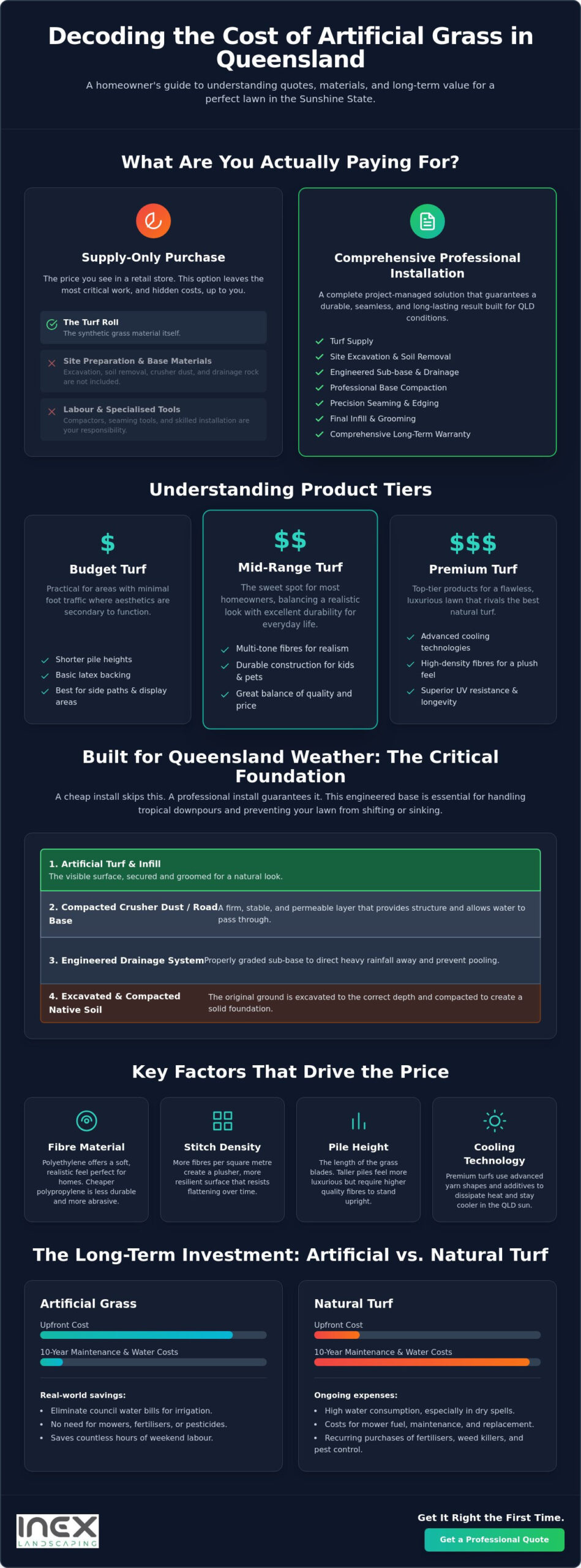
When you browse a retail store, the price you see is for the material alone. A professional installation quote is far more comprehensive. It includes the heavy labour of excavation, the removal of old soil, and the delivery of specialised base materials like crusher dust and drainage rock. It also covers the specialised tools and skilled labour required for invisible seaming and secure edging. Many homeowners consider the DIY route to save money, but they often overlook hidden expenses. Skip bin hire for old turf, plate compactor rental, and material delivery fees can quickly close the gap between a DIY effort and a professional result. A professional install also typically carries a more robust long-term warranty because the supplier knows the foundation was built correctly.
Price Tiers: Budget, Mid-Range, and Premium Turf
To help you plan your project, it helps to categorise products into three main tiers based on their intended use and material quality:
- Budget Turf: These products usually feature shorter pile heights and basic latex backing. They are a practical choice for low-traffic side paths or display areas where people don’t often walk or play.
- Mid-Range Turf: This is the “sweet spot” for many Greenbank families. These products offer a balance of realism and durability, featuring multi-tone fibres that look like natural lawn. They are built to handle the daily activities of kids and pets without losing their shape.
- Premium Turf: These are the top-tier options. They utilise advanced cooling technologies to stay comfortable in the summer heat and high-density fibres that feel incredibly plush. If you want a backyard that is indistinguishable from a perfectly manicured natural lawn, this is the tier to consider.
Ultimately, the right choice depends on your specific goals for the space. Whether you need a simple green border or a high-performance family play area, we focus on providing a solution that balances your budget with the long-term performance your property deserves. If you’re also looking for strategic ways to grow your business brand, you can learn more about I Search Marketing and their creative digital services.
Key Factors Influencing the Cost of Synthetic Turf in South East Queensland
When you compare quotes, you might wonder why two products with the same pile height have such different price points. The total cost of artificial grass QLD is heavily dictated by the technical specifications of the materials used. It isn’t just about how the grass looks on day one; it’s about how it performs after three years of Brisbane humidity and intense summer heat. Higher-quality polymers and denser construction require more raw material, which naturally increases the upfront investment but ensures the lawn doesn’t flatten or degrade prematurely.
Fibre material is the first major variable. Polyethylene is the industry standard for residential backyards because it offers a soft, realistic feel and excellent durability. Polypropylene is often used in budget-friendly options or for the “thatch” layer; however, it can be more abrasive and less resistant to heat. Beyond the material, the stitch rate and density determine how “plush” the surface feels. A high-density turf has more individual blades per square metre, providing better support and a more luxurious appearance. If you are looking to organise a site assessment, we can show you exactly how these density differences feel underfoot.
The backing of the turf is another critical factor often overlooked. In the high humidity of South East Queensland, inferior backing materials can expand and contract, leading to unsightly ripples or even tearing at the seams. A high-quality, multi-layered backing provides the dimensional stability needed to keep your lawn perfectly flat regardless of the weather. This structural integrity is a hallmark of premium products that stand the test of time.
The Importance of UV Stabilisation in the Sunshine State
Queensland’s sun is notoriously harsh on synthetic materials. Without proper protection, the radiation can cause the plastic fibres to become brittle and fade within just a few years. UV stabilisation is a chemical process where inhibitors are added to the synthetic resin to prevent the polymer from breaking down under the extreme radiation levels found in the Australian UV index. When reviewing a warranty, look for specific coverage against colour fading and structural degradation. A quality product should maintain its vibrant green hue for a decade or more, even in full-day sun exposure.
Infill Types: Sand, Rubber, or Cooling Minerals
The choice of infill is the final piece of the pricing puzzle. Infill is brushed into the fibres to keep them standing upright and to protect the backing from UV damage. While standard kiln-dried sand is the most cost-effective option, many Logan and Brisbane homeowners are now opting for specialised cooling minerals. These advanced infills can significantly reduce the surface temperature of the grass by retaining moisture and releasing it slowly. While these specialised minerals increase the per-metre cost, they make the outdoor space much more usable during the peak of summer, providing a more comfortable environment for children and pets.
The ‘Hidden’ Costs: Site Preparation and Drainage Requirements
While the quality of the turf itself is a major factor, the foundation work is where the true cost of artificial grass QLD is often determined. A beautiful surface is only as good as the ground it sits on. In South East Queensland, our unique environmental conditions mean that skipping the preparation phase is a recipe for disaster. We focus on creating a stable, engineered base that prevents the lawn from shifting, dipping, or flooding when the weather turns.
The standard for a durable installation is an excavation depth of 75mm to 100mm. This depth allows for a substantial sub-base that can support the weight of the turf and any foot traffic. In suburbs like Marsden and Greenbank, we frequently encounter reactive clay soils. These soils expand and contract significantly with moisture levels. To counter this, we replace the raw earth with specific layers of crushed rock and compacted crusher dust. This process creates a stable platform that doesn’t “heave” during the wet season, ensuring your investment remains perfectly level for years to come.
Waste removal is another significant part of the project budget. Removing 100mm of soil from a standard backyard generates several tonnes of spoil. This requires skip bins and heavy machinery for transport, along with professional tipping fees. If your site has old concrete, large rocks, or existing thick turf, the labour and disposal costs will naturally increase to ensure the site is clean and ready for its transformation.
Designing for Tropical Downpours: Drainage is King
Queensland is famous for its sudden, heavy tropical downpours. If your sub-base isn’t permeable, water will sit beneath the turf, leading to “bubbling” where the grass appears to float. Over time, poor drainage can even cause mould growth or unpleasant odours. We prioritise sub-base permeability to ensure water moves through the system and into the water table quickly. In low-lying areas or yards with poor natural fall, we may recommend adding ag-pipes or French drains. While these additions increase the initial outlay, they are essential for surviving a QLD summer storm without your backyard turning into a swamp.
Access and Logistics in South East QLD
The physical layout of your property plays a huge role in the final quote. In newer estates like Yarrabilba, narrow side-access is a common challenge. If a mini-digger cannot fit through the gate, all excavation and material transport must be done by hand with wheelbarrows. This significantly increases the labour hours required for the job. Similarly, travel and delivery logistics for outlying suburbs like South Maclean can influence pricing due to the time required to transport heavy machinery and bulk materials. Our professional artificial turf supply and install QLD services include a comprehensive site assessment to identify these logistical factors early, ensuring there are no surprises once the work begins.
Comparing Long-Term Value: Artificial Grass vs. Natural Turf
When you evaluate the cost of artificial grass QLD, it’s vital to look past the first invoice and consider the total cost of ownership over a ten-year horizon. Natural turf often feels like a bargain at the checkout; however, it demands a decade of continuous investment in both time and money. For busy families in Logan and Brisbane, the “weekend back” factor is often the most significant return on investment. Instead of spending every Saturday morning behind a mower or line trimmer, you gain a pristine, usable space that requires almost zero effort to maintain. For a detailed head-to-head breakdown of both options measured against our local climate, see our expert guide on artificial grass vs real turf Queensland.
The financial shift becomes clear when you calculate the operational expenses of a living lawn. You no longer need to worry about the rising price of petrol, the annual servicing of garden machinery, or the constant replacement of blades and trimmer cord. When these small, recurring costs are added up over several years, the gap between natural and synthetic options narrows significantly. By choosing a high-quality installation today, you are essentially pre-paying for a decade of perfect lawn without the hidden “subscription fee” of traditional garden maintenance.
Accurately tracking these operational savings is vital for any property investor or small business owner. For expert assistance with your broader financial strategy, Cairns Quality Accounting provides professional taxation and accounting services to help you maximise the return on your property investments.
Maintenance Costs Over a 10-Year Period
A natural lawn in Queensland is a hungry ecosystem. To keep it green, you’ll need regular applications of fertilisers, pesticides, and wetting agents, along with the occasional cost of top-dressing to fix uneven patches. In contrast, the upkeep for synthetic turf is remarkably simple. It involves a quick leaf blow or rake to remove debris and an occasional rinse with the hose to clear dust. If you are interested in other ways to simplify your backyard, you can read more about low maintenance lawn options Queensland to see which styles suit your lifestyle.
Environmental and Water Considerations
Water is a precious resource in South East Queensland, and council water bills can spike dramatically during our long, dry spells. Keeping a natural lawn alive during water restrictions is not only expensive but often impossible. Synthetic turf removes this stress entirely, maintaining its lush colour without a single drop of irrigation. There is also the benefit of reduced chemical run-off. Because you don’t need to apply weedkillers or heavy fertilisers, there’s no risk of these substances washing into our local waterways during a storm. While synthetic surfaces can hold more heat, we mitigate this “heat island effect” through smart landscaping, such as incorporating shade trees and using cooling infill materials. If you’re ready to transform your outdoor area into a stress-free environment, you can request a detailed quote from our team to get started.
Getting it Right: Why Professional Installation Saves You Money
While we have explored the material variables, the human element is what truly secures your investment. The total cost of artificial grass QLD often includes the peace of mind that comes from a flawless finish. Professional seaming is a specific skill that separates a DIY project from a high-end landscape. Visible joins aren’t just an eyesore; they are weak points where the turf can lift or fray over time. We treat seaming as an art form, ensuring that grain direction and tension are perfectly matched across the entire area so the joins remain invisible for years.
A flat lawn today doesn’t guarantee a flat lawn next year. If the base isn’t compacted correctly using professional-grade machinery, you’ll likely experience “lumpy lawn” syndrome after the first significant rain event. This happens when the sub-base settles unevenly, creating pockets where water can pool. It’s a common issue we see when homeowners attempt the work themselves without access to a vibrating plate compactor. Professional installers also ensure that the turf integrates seamlessly with other hardscapes. If you are also considering paving installation Greenbank QLD, coordinating these services ensures that levels and drainage are managed as one cohesive project.
Manufacturer warranties are another critical reason to choose a professional. Many turf producers require evidence of professional installation and correct base preparation to honour a claim for structural failure. By hiring a specialist, you aren’t just paying for labour; you’re buying an insurance policy on the product’s longevity.
Avoiding the Pitfalls of DIY Synthetic Turf
The temptation to save on labour costs is understandable, but the cost of “doing it twice” is a heavy burden. We are often called to sites to fix DIY failures where the turf has been cut incorrectly or the base has failed within months. These repairs usually cost more than the original professional quote would have. A professional team arrives with specialised equipment, such as power brooms to properly seat the infill and precision cutting tools for tight corners around retaining walls and garden edges. This level of meticulousness is what ensures the product performs for its full 10 to 20-year lifespan.
Start Your Transformation with INEX Landscaping
Our team brings deep local expertise to projects throughout Greenbank, Yarrabilba, and the wider Logan area. We understand the specific soil conditions and logistical challenges unique to our region. By choosing our artificial grass installation Greenbank service, you receive a fixed-price quote that covers every detail from excavation to the final power brush. We take pride in our workmanship and our commitment to being a reliable partner for your home’s transformation. You can request a site-specific quote tailored to your backyard’s unique layout to see how we can bring your vision to life.
Ready to Transform Your Outdoor Space?
Investing in a synthetic lawn is a decision that reshapes how you use your home. As we’ve explored, the true cost of artificial grass QLD is found in the balance between high-quality polymers and the meticulous engineering hidden beneath the surface. By prioritising UV-stabilised fibres and a robust, free-draining sub-base, you ensure your backyard remains a lush, usable asset for your family rather than a maintenance burden.
Our dedicated local team brings expert knowledge of South East Queensland’s unique soil and drainage requirements to every project. We believe in transparency and reliability, which is why we provide fixed-price contracts to ensure there are no hidden surprises during your installation. Whether you’re in Greenbank or a surrounding suburb, we’re here to help you achieve a flawless finish that stands the test of time.
Take the first step toward a maintenance-free lifestyle today. Get a Professional Quote for Your Artificial Grass Installation and discover how easy it is to keep your yard green all year round. We look forward to helping you create an outdoor environment you can truly be proud of.
Frequently Asked Questions
Is the cost of artificial grass worth it compared to real turf in QLD?
The investment is generally considered worthwhile when you calculate the total cost of ownership over a decade. While natural turf has a lower upfront price, artificial grass removes the ongoing expenses of council water bills, fertilisers, petrol, and mower maintenance. For many Queenslanders, the value lies in having a mud-free, perfectly green yard that survives the summer heat without constant irrigation. Our comprehensive artificial grass vs real turf Queensland comparison explores these differences in greater detail to help you make a fully informed decision.
How much does a typical 50sqm backyard cost to turf in Logan?
A 50sqm project involves significant site preparation, including the excavation and disposal of several tonnes of soil and the delivery of specialised base materials. The total cost of artificial grass QLD for an area this size depends heavily on site access and whether you choose a budget-friendly or premium cooling turf. Factors like narrow side-access in newer estates can also influence the total labour hours required.
Does the type of infill change the total price of the installation?
Yes, the choice of infill is a variable that affects the final project budget. Standard kiln-dried silica sand is the most cost-effective option for keeping fibres upright. However, many homeowners now opt for specialised cooling minerals or antimicrobial infills for pet areas. These advanced materials increase the initial outlay but provide significant benefits in temperature control and hygiene for the local climate.
Can I save money by doing the excavation myself?
You can reduce the labour portion of a quote by handling the dig-out yourself, but it requires precision and heavy equipment. You must ensure the area is excavated to a consistent depth of 75mm to 100mm with a slight fall for drainage. If the excavation is uneven or shallow, the professional installer may need to charge extra to rectify the base before they can safely lay the turf.
Why are some quotes for synthetic turf so much higher than others?
Massive price gaps usually reflect differences in the quality of the engineering beneath the grass. A higher quote typically includes deeper excavation, superior sub-base materials for reactive clay soils, and premium UV-stabilised turf. Cheaper quotes often cut corners on base compaction or use inferior materials that may ripple, sink, or fade within a few short years of exposure to the sun.
Will artificial grass increase my property value in South East Queensland?
A professionally installed synthetic lawn can enhance property value by boosting kerb appeal and highlighting a low-maintenance lifestyle. Buyers in the Brisbane and Logan regions often view a tidy, evergreen backyard as a premium feature. It eliminates the “project” of a dying lawn for the next owner, making the home more attractive to busy professionals and investors alike.
How long does professional installation take for a standard residential block?
Most residential installations are completed within two to four days. The first day is usually dedicated to the heavy work of excavation and waste removal. This is followed by the installation and compaction of the sub-base, the precision cutting and seaming of the turf, and the final application of infill. Difficult site access or complex garden shapes can occasionally extend this timeline.
What is the typical warranty period for high-quality artificial grass in QLD?
Premium synthetic turf products in Australia typically come with manufacturer warranties ranging from 7 to 15 years. These warranties generally cover manufacturing defects and protection against UV degradation or significant colour fading. It is important to remember that most warranties require the product to be installed on a correctly prepared base to remain valid over the long term.