
What makes a fence right for your Greenbank property depends on how you use the space, not just what you see in a catalogue. Choosing fencing contractors Greenbank homeowners can work with starts with a clear brief: what needs privacy, security or separation, and how the fence should fit into your yard.
It’s understandable to have questions about the project scope, boundaries and whether the finished fence will suit your home. Site conditions and approval requirements can also shape the plan, so consider these questions before work begins rather than treating fencing as a stand-alone decision.
This guide explains how to set priorities, prepare a practical project brief and coordinate fencing with the wider landscape. You’ll also learn which local checks to make around boundaries and approvals. Based in Greenbank, INEX Landscaping provides fencing alongside landscaping, turf, paving and retaining wall work, helping you plan an outdoor project around your property as a whole.
Key Takeaways
- Start your fencing brief with the outcomes that matter most, such as privacy, access or clearly defined outdoor zones.
- Plan fence lines alongside paths and nearby landscaping so the whole outdoor space works together.
- Compare project priorities and site constraints before settling on a scope. One approach won’t suit every property.
- Prepare site notes, including photos, access details, existing features and your intended fence line, before discussing the project with fencing contractors Greenbank.
- INEX Landscaping provides fencing and can consider it alongside landscaping, turf, paving and retaining wall work.
Fencing Contractors Greenbank: Start with What Your Property Needs
A fence should suit how you use your property, not just look appealing from the street. A family yard, commercial site or property with several outdoor areas may have different priorities. Before considering a particular fence design, decide what the fence needs to achieve and where it needs to work hardest.
Define the fence’s job before you select its form. This gives the project a practical direction. Fencing contractors Greenbank residents engage can then understand the purpose behind the work instead of having to assume what the property needs.
What should a Greenbank fencing project achieve?
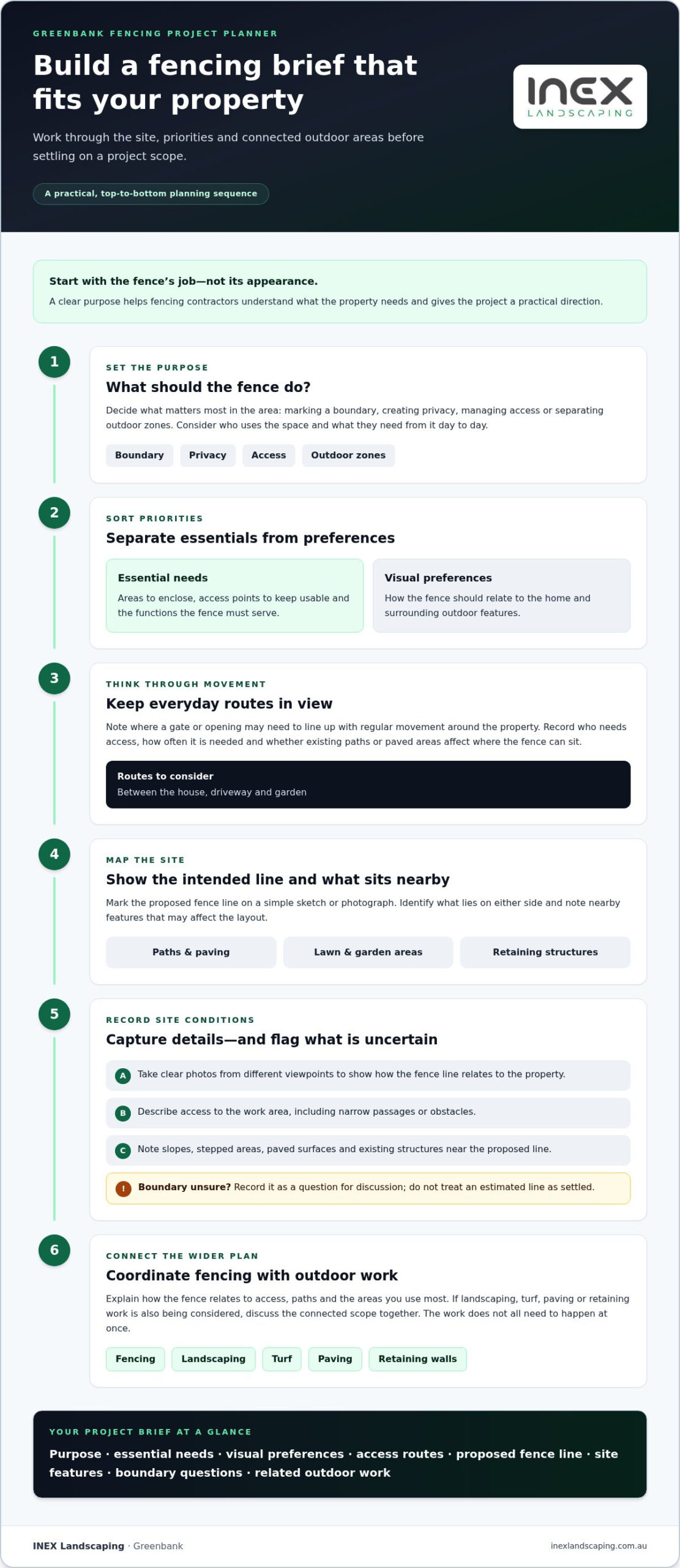
Start by thinking about who uses the area and what matters in their daily routine. Is the fence intended to mark a boundary, create privacy, manage access or separate parts of the outdoor space? A clear purpose helps distinguish essential requirements from preferences such as appearance.
Write down your priorities in two groups:
- Essential needs: the areas to enclose, access points to keep usable and functions the fence must serve.
- Visual preferences: how the fence should relate to the home and surrounding outdoor features.
Consider movement through the site, too. A gate or opening may need to line up with a regular route between the house, driveway or garden. Note who will use it, how often access is needed and whether existing paths or paved areas affect where the fence can sit. These details make the brief more useful than a general request for a new fence.
If you’re exploring options, this general overview of types of fences and their uses can help you think about the different roles a fence may serve. Use it to clarify your priorities, rather than assuming a particular form will suit your site.
How to describe your site and priorities
Give your project discussion a clear starting point with practical site notes. Mark the intended fence line on a simple sketch or photograph, and identify what lies on either side. Include nearby paths, lawn, paving, garden areas, retaining walls and other existing features that could affect the layout.
Record questions as well as observations. If you’re unsure where the boundary sits, note that for discussion rather than treating an estimated line as settled. Describe access to the proposed work area, including narrow passages or obstacles that may affect how the site is approached. A few clear photos from different viewpoints can show how the proposed fence line relates to the rest of the property.
You don’t need to arrive with every detail decided. A useful starting point is an honest picture of the site, what you need the fence to do and which preferences matter most. INEX Landscaping is based in Greenbank and provides fencing alongside landscaping and outdoor construction services. The project scope can be tailored to your property’s layout and priorities, keeping the fence connected to how you want to use the space.
How Fencing Fits Greenbank Property Layouts and Outdoor Projects
A fence line doesn’t sit apart from the rest of the yard. Plan its position alongside access routes and nearby features such as lawn, garden beds, paving and retaining structures. This wider view helps you consider how fencing may shape usable areas while keeping everyday movement through the property in mind.
Consider fence placement as part of the outdoor layout, so the boundary, access and surrounding spaces work together. For example, a proposed fence may affect how you move between a paved area and the lawn, or where a garden bed sits in relation to an enclosed space. These are practical planning questions to raise when defining the project scope.
Coordinate fencing with landscaping and garden areas
Look at how the proposed fence line relates to the parts of the yard you use most. Note lawn edges, garden areas, paths and entrances, then consider whether the fence could affect access or divide one outdoor zone from another. If you’re also planning garden or yard improvements, the Greenbank landscaping services guide can help you consider how landscaping fits into the broader project.
Discuss connected work together if landscaping, turf or paving is part of the same plan. The work doesn’t all need to happen at once. A combined conversation gives you a chance to explain the intended layout and priorities, then consider how fencing fits the property and any related work.
Plan around level changes and existing outdoor structures
Changes in ground level and existing structures are important when scoping a project. Make a note of sloping or stepped areas, retaining structures, paved surfaces and other features near the proposed fence line. Photos from different viewpoints can show how these elements meet without requiring you to decide how the work should be constructed.
A retaining structure and a fence serve different functions. A retaining wall relates to the outdoor layout and changes in ground level; a fence helps define or enclose an area. If both are relevant, discuss them as connected parts of the project rather than treating them as interchangeable. The Greenbank retaining wall guide offers further context if retaining work is also being considered.
Treat project sequencing as a planning conversation. Share which outdoor improvements you’re considering, what needs to remain accessible and which parts of the layout matter most. This gives fencing contractors Greenbank property owners engage a clearer picture of how the fence relates to the wider scope, without committing to a technical order before the site and project needs are understood.
For a Greenbank project involving fencing and related outdoor work, talk with INEX Landscaping about your project priorities. A joined-up discussion can help shape a scope around your property’s layout and how you intend to use the space.
Compare Fencing Project Priorities Before Choosing a Scope
Once you know what the fence needs to do, compare each part of the project with the site and how you use it. A boundary fence, a privacy screen and a layout that manages access answer different needs. They may overlap, but be clear about which outcome matters most in each location.
Fence selection depends on the site, its intended use and your project priorities. Rather than assuming a single fence type suits every part of a property, use the comparison below to identify what matters and where you may need to balance competing preferences.
| Priority | Questions to consider | What to include in the brief |
|---|---|---|
| Function | Is the main aim to mark a boundary, create privacy or manage access? | Describe the intended role for each section of fencing. |
| Location | Where will the fence sit in relation to the home and outdoor areas? | Note adjoining spaces and any existing features nearby. |
| Access | Who needs to move through the area, and along which routes? | Identify gates or other access points as part of the overall scope. |
| Appearance | How should the fence relate to the property and its surroundings? | Record visual preferences separately from essential functions. |
Use the rows to compare priorities by area, rather than treating the whole property as one uniform space. For example, one section may mainly need to define a boundary, while another may need a convenient route between outdoor areas. The comparison won’t select a fence for you; it helps clarify the desired outcome and any constraints for discussion with fencing contractors Greenbank property owners work with.
Match the brief to privacy, access and appearance
Rank practical needs first, then note how appearance fits around them. Privacy may be the priority in one location, while clear access or boundary definition matters more elsewhere. These aims can involve trade-offs, so describe what you need without assuming a particular material or design will deliver a specific result. Include the position and purpose of each gate or access point in the same brief.
Consider fencing alongside other property improvements
Fencing can be planned as part of a wider outdoor upgrade if other work may affect how you use or move through the space. If paving is also on your plans, consider how its location relates to the fence line and access points. The Greenbank paving installation guide offers relevant context for coordinating those project priorities.
Keep the comparison focused on what each part of the property needs, what should remain accessible and which visual preferences matter. That gives the project discussion a clear basis for shaping a scope around the site, without presuming one solution fits every area.
Plan a Greenbank Fencing Project: Site Notes, Boundaries and Local Checks
A useful project discussion starts with clear information about the site, not instructions for installing a fence yourself. A few well-prepared notes can explain the intended work, highlight access considerations and identify questions to resolve before the scope is settled. Separate what you know from what still needs checking.
What information helps scope a fencing project?
Use this preparation checklist to organise the details you can share with fencing contractors Greenbank homeowners are considering for their project:
- Note the property and proposed area. Include the address and describe which section of the property you’re considering for fencing.
- Mark the intended fence line. Sketch the proposed route on a simple plan or annotate a photo. Treat it as an indication for discussion, not confirmation of the legal boundary.
- Record access conditions. Describe how the work area can be reached and note any narrow passages, existing paths or other features that may affect access.
- Photograph the site. Take clear views of the proposed area from different angles. Include nearby structures and adjoining outdoor spaces to show the layout.
- Gather relevant plans and questions. Share existing property plans if available, and list anything you’re uncertain about, such as boundary position or adjoining-property considerations.
- State the desired outcome. Explain the main purpose of the fence and any connected outdoor work you’re planning.
This information gives the project conversation useful context. A site-specific scope can account for the property’s layout and intended use, while a generic request may leave important details unclear. You don’t need every answer before starting; separating confirmed details from open questions is a practical way to begin.
Which boundary and approval questions need checking?
Before treating a proposed line as final, consider whether its position is clear and whether the work adjoins another property. If you’re unsure, record the uncertainty rather than relying on an estimate. Boundary responsibilities and approval considerations depend on the circumstances and current rules, so don’t make assumptions based on a neighbour’s fence or a project elsewhere.
For a Greenbank property, check current Logan City Council and Queensland Government information relevant to the planned work before relying on approval guidance. Requirements can depend on the property and project details. If the fencing relates to a pool area, flag that specifically and verify the applicable Queensland requirements rather than treating it as ordinary boundary fencing.
Bring your site notes and open questions into the project discussion. Discuss your Greenbank fencing project with INEX Landscaping, and use the property details to shape a scope around the work you have in mind.
Work with INEX Landscaping on Fencing in Greenbank
A well-planned fence should make sense for the property and how you want to use it. INEX Landscaping is based in Greenbank and provides fencing alongside landscaping and outdoor construction services. Your project can be considered in the context of related work, such as turf, paving or retaining walls, rather than viewing the fence as an isolated feature.
For people searching for fencing contractors Greenbank, a useful starting point is a conversation grounded in the actual site. Share what you want the fencing to achieve, where you’re considering it and whether other outdoor work is part of your plans. The scope can then be tailored to your property and stated priorities, rather than assuming every site calls for the same approach.
A local landscaping business for connected outdoor work
Fencing can influence how outdoor areas are divided and accessed, while landscaping, turf, paving and retaining work can shape the surrounding space. Considering these elements together helps keep the project brief focused on how the property is used and what work you’re planning. INEX Landscaping serves Greenbank and nearby South East Queensland suburbs, including Yarrabilba, Parkridge, Marsden, Bahrs Scrub and South Maclean.
You don’t need to have every detail settled before outlining the project. Explain which improvements are definite and which are still being considered. For instance, you might be planning fencing now and weighing up whether paving or landscaping should be included in the wider scope. Clear priorities help frame the discussion around your property and the work you want done, without assuming a particular fence material, style or result.
Take the next step with a clear project brief
Before you get in touch, gather a few details that bring the plan into focus:
- Location: the suburb and the part of the property involved.
- Goals: what you need the fence to do and which outcomes matter most.
- Proposed area: a description, sketch or photographs showing where you’re considering the fence.
- Related work: any landscaping, turf, paving or retaining work connected to the project.
- Open questions: anything you’re still working through about the site, boundaries or access.
These notes don’t need to form a finished specification. They give INEX Landscaping a practical picture of the property, your intended work and the priorities that should guide the project scope. Relevant plans or site photographs can help illustrate the area you’re describing.
When you’re ready to discuss the next step, discuss your Greenbank fencing project with INEX Landscaping. Share the details you have to start a straightforward conversation about fencing for your property.
Turn Your Fencing Plans into a Clear Next Step
A fencing project doesn’t need to begin with every detail decided. Start with a clear sense of what you want the outdoor space to do, then refine the plan as you consider the property and your priorities together. That gives your ideas room to develop into a practical scope.
Before speaking with fencing contractors Greenbank homeowners can make the first conversation more useful by noting what matters most and what’s still open to discussion. Treat the brief as a starting point, not a fixed specification. Explain the outcome you’re aiming for, then discuss how the work might fit the property and any connected outdoor improvements.
INEX Landscaping is based in Greenbank, Queensland, and provides fencing alongside landscaping, paving, turf and retaining wall services. Its local service area includes Greenbank, Yarrabilba, Parkridge, Marsden, Bahrs Scrub and South Maclean. To take your ideas from planning to a project discussion, talk with INEX Landscaping about your fencing plans. A considered brief is a practical first step towards shaping an outdoor space that works for you.
Frequently Asked Questions
Do I need approval to build a fence in Greenbank?
Not always. In Logan City, a boundary fence up to 2 metres high is generally accepted development and doesn’t require council building approval. Approval may be needed for a fence over 2 metres, a pool barrier or a fence connected to a retaining wall where combined height limits apply. These are general rules, so check current Logan City Council and Queensland requirements for your property and proposed work before proceeding.
Can a fence be planned as part of a landscaping project?
Yes. Planning fencing with landscaping can help account for how the different parts of your yard relate. For example, if you’re changing a lawn area or adding paving, consider how the fence line and entrances fit with those plans. INEX Landscaping provides fencing alongside landscaping and outdoor work, so the scope can be considered in context. This is relevant for projects in Greenbank, Yarrabilba, Parkridge, Marsden, Bahrs Scrub and South Maclean.
How do I work out where my property boundary is before fencing?
Start with any property documents or plans you have, but don’t assume an existing fence marks the legal boundary. If the line is unclear or a neighbour’s land is affected, resolve the boundary question before treating a proposed fence position as final. A cadastral map can offer useful context, but it may not settle the exact position on the ground. Note the uncertainty in your project brief and seek appropriate boundary clarification.
Can fencing be planned for a sloping block?
Yes. A slope doesn’t prevent you from discussing a fencing project, but changes in ground level can affect how the site needs to be considered. Describe where the slope begins and ends, and note any nearby retaining structures, steps or paved areas. Photos from more than one viewpoint can help explain the layout. The project scope should reflect the actual site, rather than relying on assumptions based on a flat section of the property.
What information should I include when requesting a fencing project discussion?
Include the property location, the area you’re considering, the outcome you want and any access details that help explain the site. Clear photographs and a marked-up plan can show nearby structures or paths. Mention any related outdoor work and list questions that are still unresolved, such as the boundary position. This gives fencing contractors Greenbank homeowners contact a useful starting point for discussing the project scope.
Can fencing and retaining wall work be planned together?
Yes, they can be discussed as connected parts of an outdoor project, while recognising that they serve different purposes. A retaining wall relates to changes in ground level; fencing helps define or enclose an area. If both are being considered, describe their locations in relation to each other and include the overall site layout in your project notes. Approval considerations may depend on the proposed work, so check current requirements before making decisions.
How long does a fencing project in Greenbank take?
There isn’t one reliable timeframe for every project. The duration depends on the agreed scope and property details, including the area involved, site access and any related outdoor work. A project with several connected tasks may need different planning from a straightforward fencing scope. Share the information you have so the work can be discussed in context; timing should be established for the specific project rather than assumed from a general estimate.